Maximizing Efficiency: The Industrial Guide to Selecting Finned Tubular Heaters
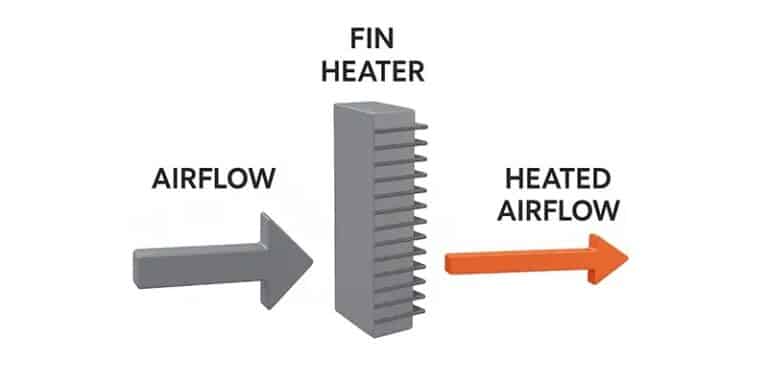
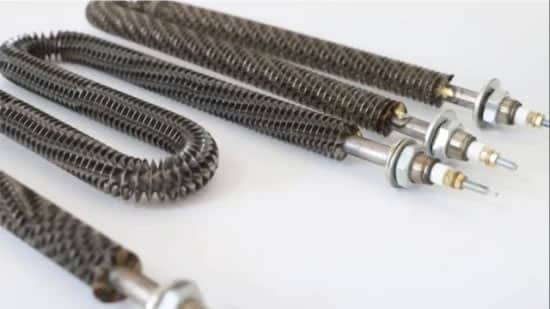
In forced-convection air heating, the Finned Tubular Heating Element is the workhorse. By increasing the surface area, fins allow for higher power in tighter spaces while keeping the element’s sheath temperature under control.

However, a “standard” heater often leads to premature failure or inefficient heat transfer. Here is how to specify the right element for your specific industrial environment.
1. Defining Your Thermal Load and Airflow
Before looking at the hardware, define your environment. The relationship between airflow and heat dissipation is the most common point of failure.
Air Velocity is Non-Negotiable
Finned heaters rely on air moving across the fins to carry heat away. If your air velocity is below 2 m/s (approx. 400 FPM), the element will overheat, leading to oxidation or burnout.
- Low Flow: Requires lower watt density to prevent damage.
- High Flow: Allows for compact, high-wattage configurations.
Calculate Your Required Temperature Rise (Delta T)
To ensure your heating system is neither underpowered nor inefficiently oversized, use the fundamental thermal power equation for air:
Power (kW) = SCFM × Delta T (°F) / 3191 (or for Metric: P = m_dot × Cp × Delta T)
Where:
- P (Power): The total heating capacity required (measured in kW).
- m_dot (Mass Flow Rate): The volume of air moving through the heater per unit of time.
- Cp (Specific Heat): The thermal property of air (approximately 1.006 kJ/kg·°C).
- Delta T: The target temperature difference between the air inlet and outlet.
By calculating this accurately, you prevent “over-specifying” power, which significantly extends the service life of your finned elements and reduces energy overhead.
2. Material Selection: Matching Sheath to Atmosphere
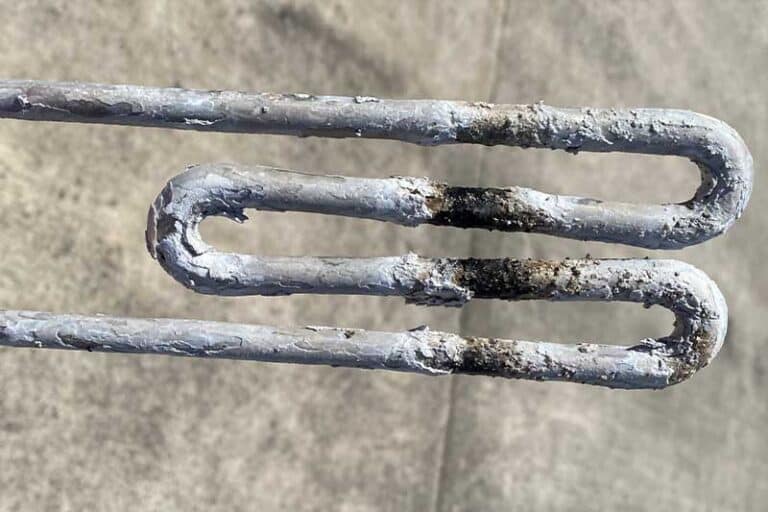
The “standard” isn’t always the “best.” Choosing the wrong sheath or fin material leads to rapid corrosion.

| Material | Application Environment | Temperature Limit |
| Galvanized Steel | Clean, dry air heating (HVAC, Ovens) | Up to 450°C |
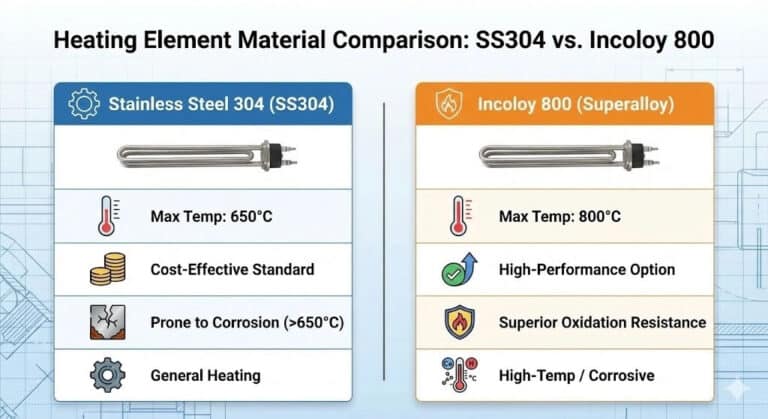
| Stainless Steel 304 | Humid air, mild chemicals, food grade | Up to 650°C |
| Stainless Steel 316L | Highly corrosive or marine environments | Excellent Corrosion Resistance |
| Incoloy 800/840 | High-temperature industrial drying, extreme duty | Up to 850°C |
3. Optimizing Watt Density (W/cm²)
Watt density is the “pulse” of your heater. For finned elements, the added surface area of the fins effectively reduces the surface watt density, but the internal resistance wire still has limits.

- Rule of Thumb: For stagnant air, stay below 3 W/cm². For high-speed forced air, you can safely move toward 6-10 W/cm².
- The Risk: Excessive watt density in a low-flow environment causes the magnesium oxide (MgO) insulation to degrade, leading to electrical shorts.
4. Mechanical Design and Installation Constraints
A heater that doesn’t fit—or can’t be serviced—is a liability.
Fin Type: Spiral vs. Rectangular
- Spiral Fins (Continuous): Best for round ducts and high-speed airflow; offers the best structural integrity.
- Rectangular Fins: Often used in bank assemblies where maximum surface area is needed in a square cross-section.
Terminations and Sealing
In high-humidity applications, the choice of end seal (Epoxy, Silicone, or RTV) is critical. If the heater “breathes” in moisture during cool-down cycles, it will fail on the next start-up. For industrial ovens, ensure the terminals are kept outside the heated zone using “cold sections.”
5. Why Precision Customization Matters
Off-the-shelf heaters rarely meet the exact pressure drop or heat profile required by custom machinery. At DarwinHeat, we focus on the granular details that extend service life:
- Vibration Resistance: Essential for mobile or heavy-machinery heating.
- Uniform Heat Profile: Ensuring no “hot spots” along the bend radius.
- Strict Resistance Tolerance: Critical for balanced 3-phase systems.
Ready to Spec Your Project?
Choosing the right heater is a balance of physics and material science. If you are dealing with a complex airflow or a corrosive environment, our engineering team can provide a thermal simulation to validate your design before production.