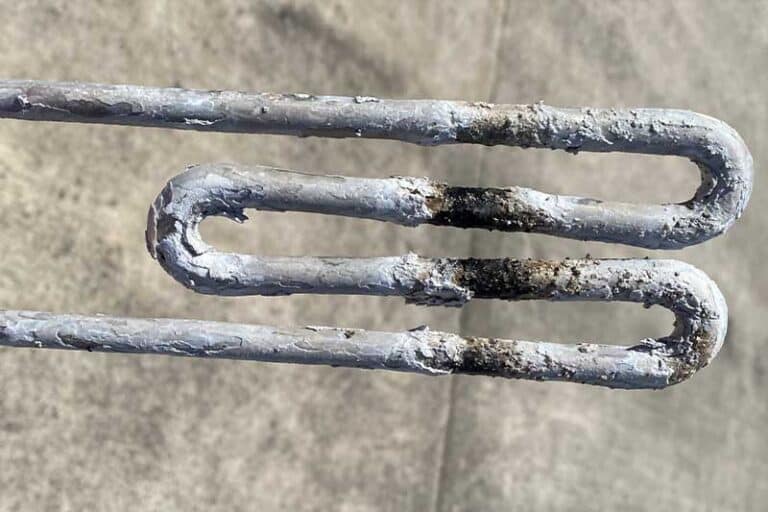
The Engineering Logic Behind Custom OEM Heating Element Design
In the competitive landscape of Original Equipment Manufacturing (OEM), the thermal performance of a machine is rarely determined by the heater alone, but rather by the synergy between the heating element and the system’s overall design envelope. Moving beyond “off-the-shelf” components allows engineers to eliminate compromises in packaging and performance, but it requires a disciplined approach to several critical engineering variables.
1. Thermal Flux and the Watt Density Equilibrium
The primary constraint in any heater design is the relationship between the energy produced by the internal resistance wire and the ability of the process medium to convect that heat away. In engineering terms, this is managed through Watt Density (W/cm²).
OEM designers must balance high power requirements with the physical limitations of the sheath material and the fluid’s film temperature. For instance, while water can safely handle a flux of 10-12 W/cm², viscous oils or stagnant air require significantly lower densities ( 2-3 W/cm² ) to prevent carbonization or insulation breakdown. At DarwinHeat, we utilize specific compaction densities of Magnesium Oxide (MgO) to ensure the thermal conductivity ( k ) of the internal insulation is optimized for your specific duty cycle.
2. Metallurgical Selection for Process Compatibility
The sheath of a tubular heater serves as the primary pressure boundary and corrosion barrier. Selecting the appropriate alloy is a function of both the operating temperature and the chemical aggressiveness of the environment.

- Incoloy 800/840: Preferred for high-temperature air heating and “extreme duty” cycles due to its superior resistance to oxidation and scaling at temperatures exceeding $800^\circ\text{C}$.
- 316L Stainless Steel: The standard for medical, pharmaceutical, and deionized water applications where resisting pitting and stress corrosion cracking is mandatory.
- Specialty Alloys: For highly acidic or alkaline environments, materials such as Titanium or Inconel are utilized to ensure the structural integrity of the element remains uncompromised over thousands of operational hours.
3. Mechanical Integration and CAD-Driven Geometry
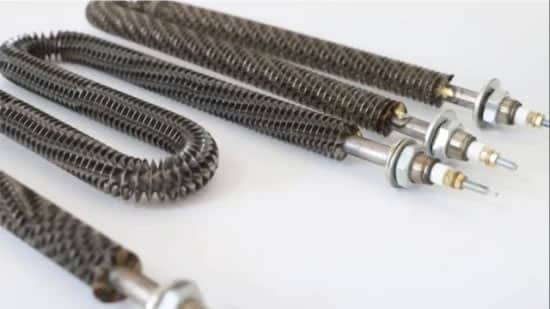
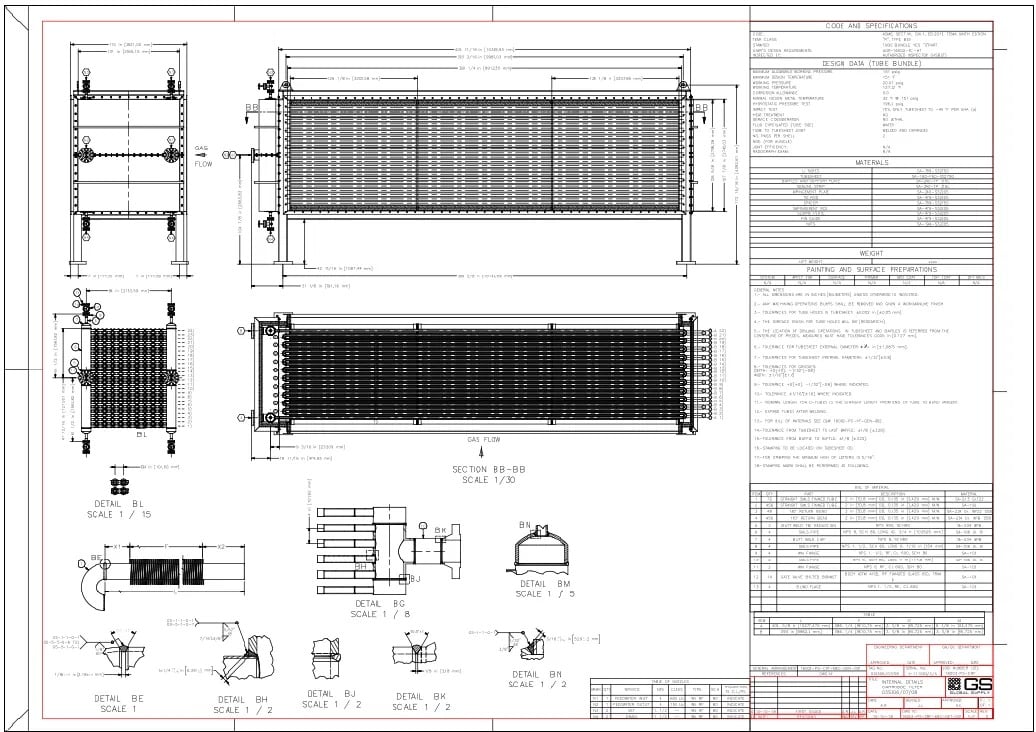
Modern OEM manufacturing demands “plug-and-play” components. This is achieved through CNC-controlled bending and 3D forming, allowing heating elements to conform to the precise contours of a manifold, tank, or vacuum chamber.
By integrating 3D CAD models (STEP/IGES) into the initial design phase, engineers can account for thermal expansion, electrical clearances, and terminal orientation. This digital prototyping phase eliminates mechanical interference during assembly and ensures uniform heat distribution by placing the active heated length exactly where it is required, avoiding “cold spots” that can lead to process inconsistencies.
4. Termination Systems and Environmental Protection
The electrical interface, or termination, is the most common point of failure in industrial heaters due to moisture ingress or mechanical vibration. OEM specifications should include precise exit methods, such as:
- Moisture Barriers: Utilizing epoxy or silicone resin seals to prevent the hygroscopic MgO from absorbing humidity during downtime.
- Lead Wire Engineering: Selecting lead materials (e.g., fiberglass-braided silicone or Teflon) based on the ambient temperature of the terminal box and the required abrasion resistance.
- Custom Fittings: Incorporating brazed or TIG-welded mounting flanges and threaded headers directly onto the element to simplify the installation process for the end-user.
Advancing Your OEM Thermal Strategy
Developing a custom heating solution is a collaborative process. Whether you are optimizing a semiconductor wafer chuck or a food processing oven, the engineering team at DarwinHeat provides the technical expertise to transform your specifications into high-reliability hardware.
Would you like me to generate a technical data sheet (TDS) template for your engineering team to use during the initial design phase?