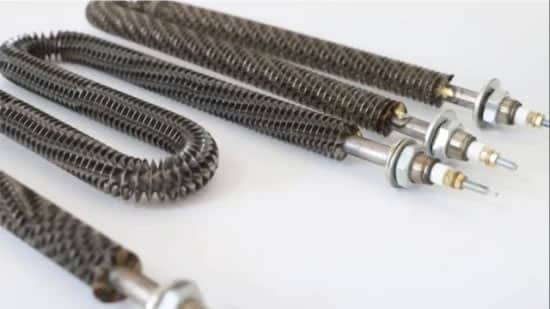
Why Surface Load Is the Single Most Important Factor in Your Heater’s Lifespan
In industrial heating, many customers focus solely on Voltage and Wattage. However, there is a hidden metric that determines whether your heater lasts for five years or five weeks: Surface Load, also known as Watt Density. Understanding this value is the difference between a high-performance system and a catastrophic equipment failure.
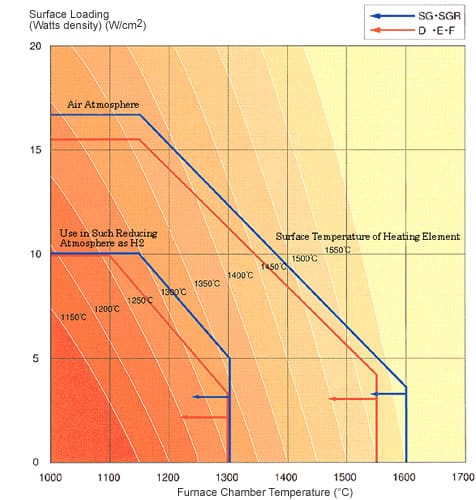
Defining Surface Load: It’s All About Power Distribution
Surface load represents the amount of electrical power (Watts) dissipated over every square centimeter (or square inch) of the heater’s sheath surface.
Think of it like a car engine: Wattage is the horsepower, but Surface Load is the RPM. If you run a small engine at maximum RPM constantly, it will burn out. Similarly, if you cram too much wattage into a small heating element, the internal temperature will exceed the material’s physical limits.
The Standard Calculation Formula:
To find your surface load, use this simple calculation: Watt Density (W/cm²) = Total Wattage / Total Surface Area of the Heated Zone
Why Does Surface Load Matter for Your Specific Application?
The “safe” surface load is not a fixed number; it depends entirely on the medium you are heating. Heat must be “stripped away” from the element surface to prevent internal overheating.
- Heating Water: Water is an excellent heat conductor. You can safely run a high surface load (up to 10-12 W/cm²) because the water removes the heat instantly.
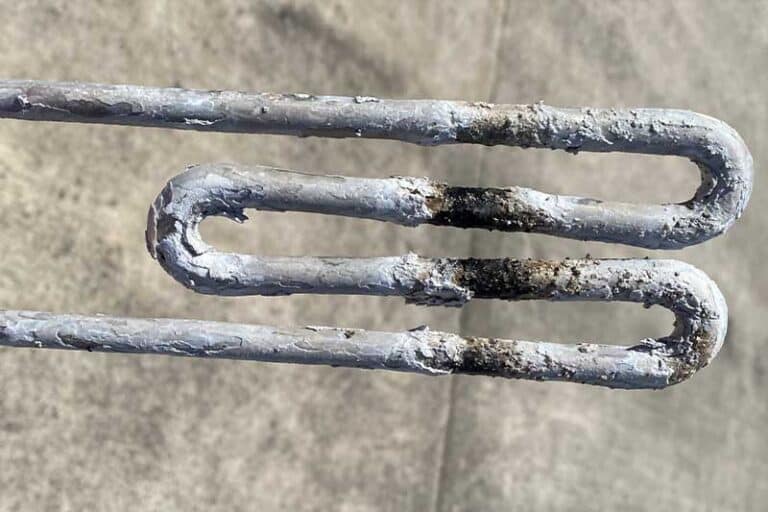
- Heating Oil: Oil is more viscous and carbonizes easily. If the surface load is too high (above 2-4 W/cm²), the oil will “crack” and form a carbon crust on the heater, leading to localized hotspots and burnout.
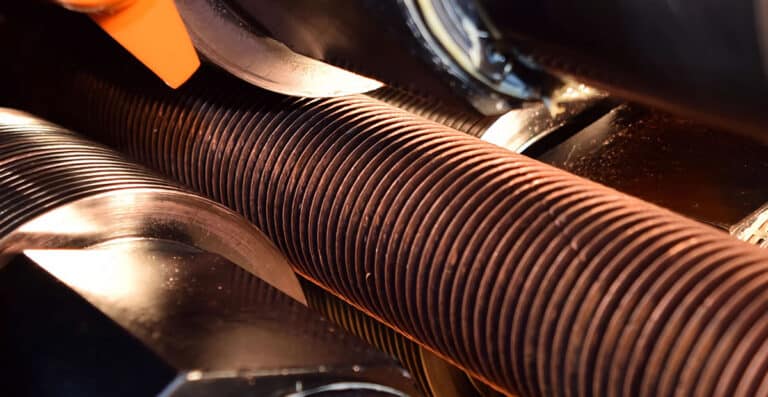
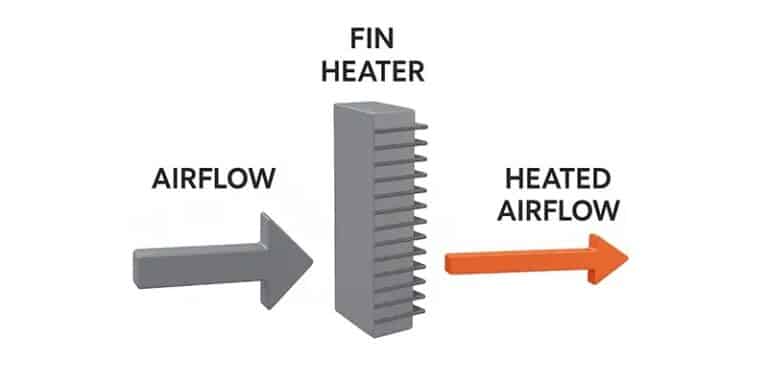
- Heating Air: Air is a poor conductor. In stagnant air, you must keep the surface load very low (below 3 W/cm²). In high-speed forced air, you can use Finned Heaters to artificially increase surface area and allow for higher wattages.
The Consequences of Getting the Surface Load Wrong
Choosing an incorrect surface load is the primary cause of industrial heater failure. When the load is too high for the medium, the element suffers from:
- Magnesium Oxide (MgO) Degradation: The internal insulation loses its dielectric strength, leading to electrical leakage.
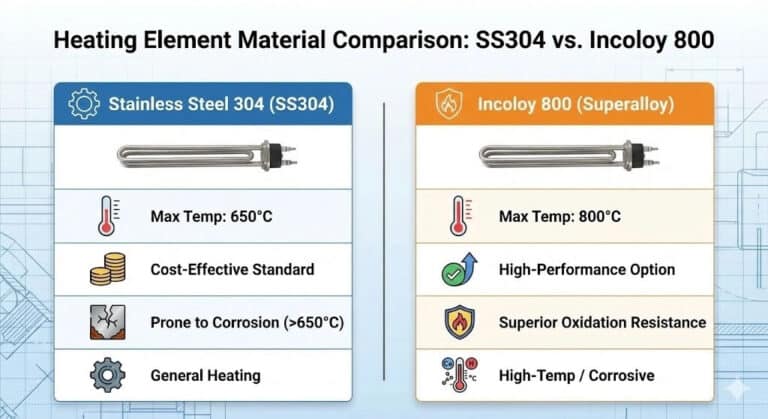
- Sheath Melting/Oxidation: The outer metal (Stainless Steel or Incoloy) reaches its melting point or develops “pinholes.”
- Media Damage: Your chemicals, oils, or food products may burn or degrade due to the excessive surface temperature.
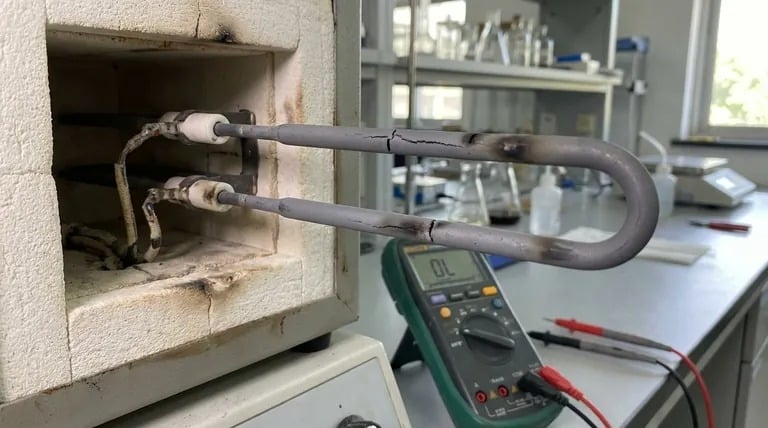
How DarwinHeat Optimizes Your Design for Maximum Durability
At DarwinHeat, we don’t just manufacture to your requested dimensions; we audit your specifications. If a customer requests a wattage that results in a dangerously high surface load, our engineering team will suggest:
- Increasing the Element Length: Spreading the power over a longer tube to drop the density.
- Changing the Tube Diameter: Increasing the diameter to provide more surface area.
- Material Upgrades: Utilizing high-nickel alloys like Incoloy 800 that can withstand higher surface temperatures.
Summary: The Golden Rule of Industrial Heating
Lower surface load equals longer heater life. While a high-watt-density heater may be smaller and cheaper upfront, the cost of downtime and replacement far outweighs the initial savings.
Do You Need a Professional Audit of Your Current Heater Specs?
Don’t guess on your next project. Provide us with your medium, flow rate, and target temperature, and we will calculate the optimal surface load to ensure your system runs reliably for years to come.